Average Reviews:

(More customer reviews)Are you looking to buy Black Students in the Ivory Tower: African-American Student Activism at the University of Pennsylvania, 1967-1990? Here is the right place to find the great deals. we can offer discounts of up to 90% on Black Students in the Ivory Tower: African-American Student Activism at the University of Pennsylvania, 1967-1990. Check out the link below:
>> Click Here to See Compare Prices and Get the Best Offers
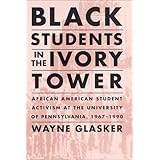
Black Students in the Ivory Tower: African-American Student Activism at the University of Pennsylvania, 1967-1990 ReviewGlasker's analysis of the black student movement at the University of Pennsylvania in the 1960s and 1970s is an important contribution to the field of black studies. However, it has importance far beyond this field, as it sheds light on the basic issues of diversity in the multi-cultural setting that has characterized American society in recent decades. He introduces and explains categories of analysis that may be unfamiliar to most readers, such as the concept of bi-culturalism. Like other ethnic groups and interest groups, black students wanted to have a setting where they could represent their own interests and cultural inclinations, but this did not mean that their all-black organizations were separatist or nationalist. Not only did presumeably liberal white organizations find all-black organizations uncomfortable, so did integrationist organizations such as the NAACP. Glasker traces all these cross currents in a sensitive and well-documented fashion. The episodes at the University of Pennsylvania, as he suggests, were replicated at many other campuses across the United States as universities began to admit black students with lower SAT scores from urban settings to help achieve more racial balance. At institutions such as Cornell, Rutgers, and many state universities, the same patterns emerged: black students seeking institutions that would preserve their different values and attiutudes, at the same time that they pursued the achievement of education and professional development that would earn them a place in the mainstream society. The essence of bi-culturalism comes through in the study: the simultaneous preservation of cultural differences and the pursuit of the middle class aspirations for economic advancement. The book should be purchased by all major libraries and by any individual who is interested in this fascinating aspect of modern American life.Black Students in the Ivory Tower: African-American Student Activism at the University of Pennsylvania, 1967-1990 OverviewIn the late 1960s and early 1970s, the number of African American undergraduates at the University of Pennsylvania grew dramatically. This book describes the circumstances surrounding the university's decision to increase its black enrollment and the consequences that followed. Focusing on the role of black student activism, Wayne C. Glasker traces the trajectory of controversy and debate over such issues as assimilation, integration, Black Nationalism, and cultural pluralism on a single university campus.Glasker begins his study in the late 1960s, when the university's expansion into a predominantly black Philadelphia neighborhood precipitated a massive sit-in and protest. In response, Penn accelerated the process of admitting more black students, doubling the number of black matriculants by September 1969. Many came from inner city public high schools with backgrounds, ideas, and interests far different from those of the affluent middle- and upper-class white students who constituted the majority of the undergraduate population. As a result, the next decade was marked by recurrent tension and conflict, as black students at Penn rejected assimilation and agitated successfully for the creation of a variety of institutions that recognized their needs. These included an Afro-American studies program, a residence for students interested in black culture, and a Black Student League. Following a sit-in in 1978,they won a demand for an Inter-cultural Center and formed the United Minorities Council, and in 1986 they joined with white activists to press the university to divest its holdings from companies doing business in South Africa.Throughout the book Glasker interweaves two parallel stories: that of an Ivy League university wrestling with questions of diversity, compensatory education, and the meaning of merit and qualification; and that of black students grappling with issues of assimilation, separatism, and cultural pluralism. In the end, he argues, the students sought to preserve their own distinctive ethnic culture, identity, and heritage while pursuing economic upward mobility. Rather than separatism, they aspired to a form of biculturalism that involved economic empowerment without cultural assimilation.Want to learn more information about Black Students in the Ivory Tower: African-American Student Activism at the University of Pennsylvania, 1967-1990?
>> Click Here to See All Customer Reviews & Ratings Now

0 comments:
Post a Comment